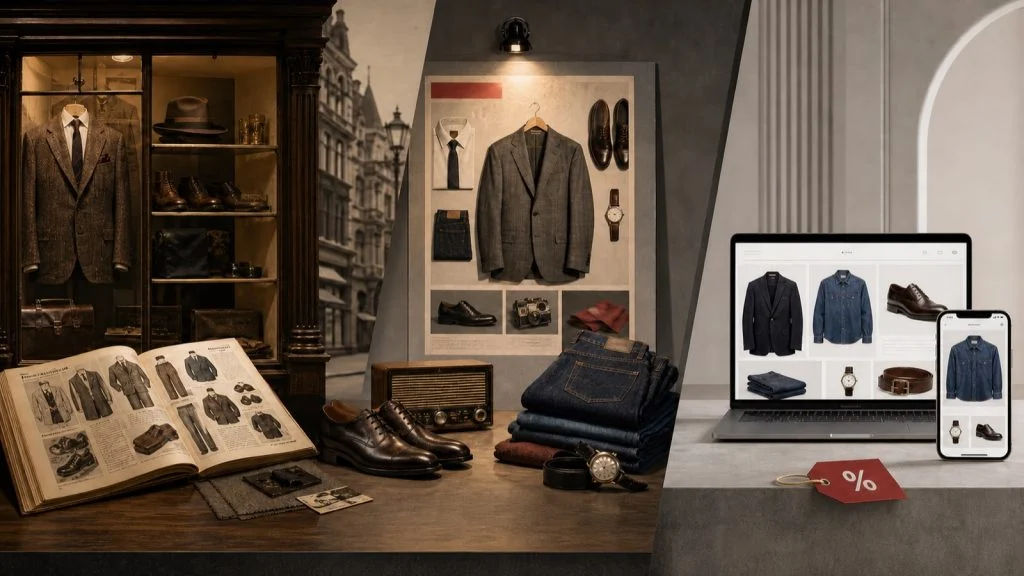
Explore the history of fashion marketing from fashion plates and store displays to e-commerce, social media, and a practical Diesel promo code example.
In this guide (12)
- Early fashion marketing: illustrations and periodicals
- Department stores and window displays turn shopping into an experience
- Magazines, advertising, and the rise of designer names
- Boutiques and youth culture: the store becomes media
- Television and celebrity expand fashion’s reach
- The internet changes the fashion buying journey
- Social media, creators, and affiliate marketing
- Diesel as an example of modern fashion positioning
- How to use Diesel promo code ADM52
- Lessons from the history of fashion marketing
- Frequently asked questions
- Conclusion
The active Diesel code on Coboniksa is ADM52 (15% Off). Enter it in the coupon box at checkout and confirm the change in the order total before you pay.
| Store | Code | Offer | Link |
|---|---|---|---|
| Diesel | ADM52 | 15% Off | Store page |
Fashion marketing did not begin with Instagram or online stores. Once clothing was sold to a broad audience, merchants and designers used images, stories, and retail displays to persuade people that a garment could communicate taste, status, or lifestyle. The tools changed over time, but the central task remained the same: turning fabric and design into meaning that a customer wants to own.
This guide follows the history of fashion marketing from printed illustrations and shop windows to e-commerce and affiliate marketing. It then applies those ideas to a current example: the Diesel promo code ADM52 and its tracked store link.
Early fashion marketing: illustrations and periodicals
During the nineteenth century, fashion plates published in magazines and journals helped distribute new silhouettes, colours, and styling ideas. The Victoria and Albert Museum explains that artists, publishers, and advertisers played an important role in circulating fashionable styles before modern fashion photography became the standard.
These plates performed a role similar to a fashion post today. They showed the look, connected it with a season or occasion, and helped readers imagine it in their own wardrobes. This established a principle that still matters: an image does more than document a product; it places the product inside a story.
Department stores and window displays turn shopping into an experience
As department stores expanded in the late nineteenth and early twentieth centuries, window displays, lighting, floor layouts, and coordinated product groupings became marketing tools. The goal was no longer only to show inventory. Retailers designed a visual journey that encouraged people to stop, enter, and explore related items.
A modern fashion homepage uses the same logic: a leading image creates attention, supporting products extend the idea, and a clear call to action moves the visitor towards a category or checkout.
Magazines, advertising, and the rise of designer names
In the twentieth century, fashion magazines, advertising photography, and department-store campaigns helped turn designer names into recognisable brands. The Metropolitan Museum of Art describes how the 1930s “American Fashions for American Women” campaign combined advertisements and in-store displays to promote American designers.
The message grew beyond “buy this shirt.” It became “choose the identity represented by this label.” Fashion brands therefore developed consistent photography, writing, and visual codes that audiences could recognise before reading a product name.
Boutiques and youth culture: the store becomes media
In the 1950s and 1960s, boutiques offered a less formal shopping experience connected with youth, music, and street culture. V&A material on 1960s fashion notes that small self-service boutiques helped designers get closer to their customers and respond more quickly to changing tastes.
This period made fashion marketing more community-driven. People did not encounter a garment in isolation; they saw it within a cultural scene or a group they wanted to join.
Television and celebrity expand fashion’s reach
Television, film, and celebrity photography allowed a look to reach a mass audience quickly. Partnerships between labels and public figures became part of the marketing message. Effective campaigns, however, still depended on fit: the personality had to make sense for the brand and its intended customer.
The internet changes the fashion buying journey
E-commerce moved many functions of a physical store onto a screen. Product photography, sizing information, return policies, reviews, page speed, delivery details, and mobile usability all became part of fashion marketing. A shopper can now discover, compare, and buy an item from one device in a single session.
Search engines also made useful editorial content more important. Questions such as “how should jeans fit?” or “does a Diesel promo code work on sale items?” reveal clear shopper intent. A helpful answer earns attention; transparent terms and a usable product page help the visitor make a sound decision.
Social media, creators, and affiliate marketing
Social platforms and creators brought fashion content closer to everyday life through outfit styling, fabric reviews, and sizing demonstrations. In affiliate marketing, a publisher may earn a commission when a visitor follows a tracked link and completes an eligible purchase. This normally does not mean a higher price for the shopper.
Responsible affiliate content discloses the commercial link, avoids promising that every shopper or product will qualify, and tells readers how to verify the result before payment.
Diesel as an example of modern fashion positioning
Diesel’s official company history says Renzo Rosso founded the business in 1978 with the ambition to create innovative denim. As the label expanded from jeans into clothing and accessories, individuality and self-expression remained central to its positioning.
A modern Diesel customer journey may start with a search about the brand or a type of denim, continue through a product page, and finish with a promo code at checkout. Story, content, commerce, and measurable promotion now operate in one connected journey.
How to use Diesel promo code ADM52
- Open the Diesel link above.
- Select the products and sizes you want, then add them to your basket.
- Continue to the basket or checkout and find the promo-code field.
- Enter ADM52 exactly, without spaces.
- Confirm that the eligible 15% result appears in the order summary.
- Review currency, delivery, tax, and return information before paying.
New releases, sale items, selected categories, or certain accounts may be excluded, and campaign terms can change. If the discount does not appear, do not assume it will be added after the order is placed.
Lessons from the history of fashion marketing
- Image plus context: show how an item fits into real use, not only as an isolated product.
- Consistent identity: keep photography, colour, and copy recognisable.
- Practical information: explain sizing, fabric, delivery, and returns.
- Honest promotion: state the discount, exclusions, and verification method.
- Measurable performance: use tracked links and distinct codes to compare channels.
Frequently asked questions
When did fashion marketing begin?
There is no single starting date. It developed through nineteenth-century fashion plates, periodicals, and retail displays, then expanded through magazines, advertising, boutiques, television, e-commerce, and social media.
How is fashion marketing different from clothing advertising?
Advertising is one marketing tool. Fashion marketing also includes audience research, brand positioning, pricing, distribution, content, retail experience, and post-purchase service.
What is the Diesel promo code in this guide?
The code is ADM52, with an advertised 15% discount when the current conditions apply. Confirm the result in the checkout summary.
Is the Diesel link an affiliate link?
Yes. It contains marketing tracking, and CoboniKsa may earn a commission from an eligible purchase completed through it.
Conclusion
The history of fashion marketing is the story of one idea moving across different media: from a printed plate and shop window to a short video, product page, and promo code. The tools evolve, but effective marketing still combines attractive presentation, a clear identity, useful information, and a verifiable offer.
Historical sources: V&A on fashion plates, The Met on American fashion campaigns, and Diesel’s company history.