
How discount codes grow merchant sales and profits: verified global stats, the noon and Namshi example, and how AI analyzes coupon data.
94% of Americans used a coupon in the past year.
Coupons are no longer a nice-to-have extra. They have become part of how people decide to buy.
So how does a merchant turn a code into revenue and profit?
1) Codes win new customers
- 86% of online shoppers are more likely to try a new business because of a coupon.
- The first order is the hardest one to win, and a code makes it easier.
2) Shoppers look for codes before they pay
- 48% of consumers find coupons through search engines and 44% through coupon websites.
- If your code isn’t in those places, shoppers will find a competitor’s code instead.
3) A fast-growing market
- Digital coupon revenue is projected to reach $12.6B in 2026.
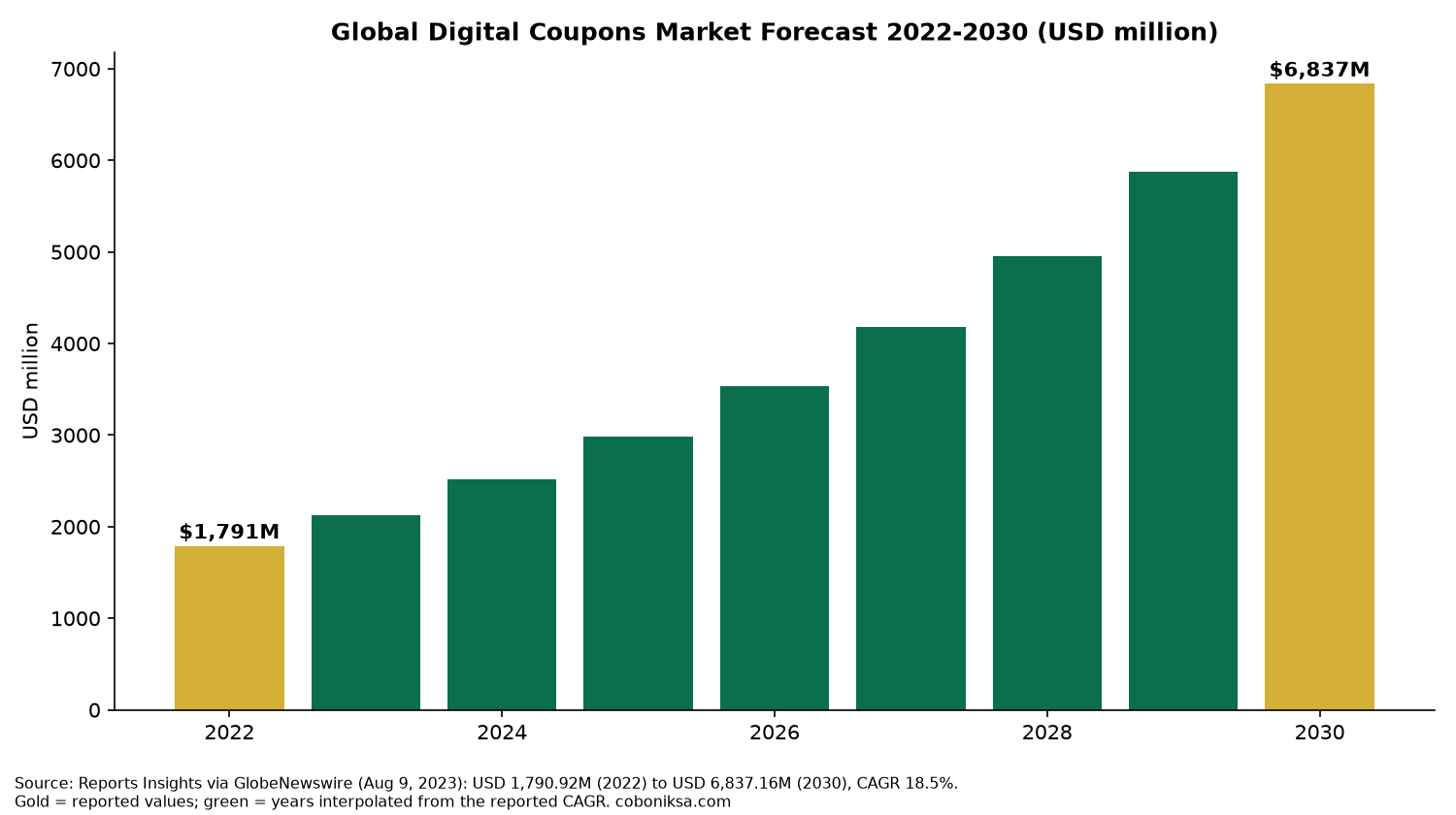
- Reports Insights valued the global digital coupons market at $1.79B in 2022 and projects $6.84B by 2030, a 18.5% CAGR.
- The two estimates differ because each source defines the market differently, but both point to growth.
4) Codes protect margin when you measure them
- The average digital coupon redemption rate is about 7%.
- That means the discount goes mainly to shoppers who needed an extra push, not to every customer.
- When each channel or publisher has its own code, you can see where every order came from and pay commission only on real sales.
noon and Namshi: a regional example
- noon is one of the region’s largest e-commerce platforms and is backed by Saudi Arabia’s Public Investment Fund.
- noon acquired Namshi for $335.2M, and the deal closed in February 2023.
- Both platforms rely on publisher and affiliate codes. Each publisher gets its own code, so the platform knows who drove each sale and the shopper gets a benefit.
- Example: noon’s VV100 is a cashback code that returns part of the order value to the shopper.
- Example: Namshi’s bky15 is distributed through the Admitad program.
- The result is thousands of publishers promoting the store, with commission paid only on completed sales.
Want to earn as a publisher?
How AI helps analyze marketing data
- Coupon attribution: links each code to its channel and campaign. It shows which publishers bring new customers and which ones only discount sales that would have happened anyway.
- Segmentation: groups customers by behavior, such as price-sensitive, loyal or new, so each group gets the right offer.
- Forecasting: predicts demand around peaks such as White Friday, 11.11 and Ramadan, which helps you set the discount size and stock levels.
- Leak detection: flags codes that spread to places they weren’t meant to appear.
Conclusion
A discount code that is planned and measured is a performance channel. It brings new customers, lifts conversion, and you only pay for it when you sell.
👉 Discover discount codes and deals
Sources
Figures and statistics in this article come from: Capital One Shopping, GlobeNewswire, Reuters, and The National.
Disclosure: This article may contain discount codes and affiliate links. We may earn a commission when you buy or sign up through them, at no extra cost to you.