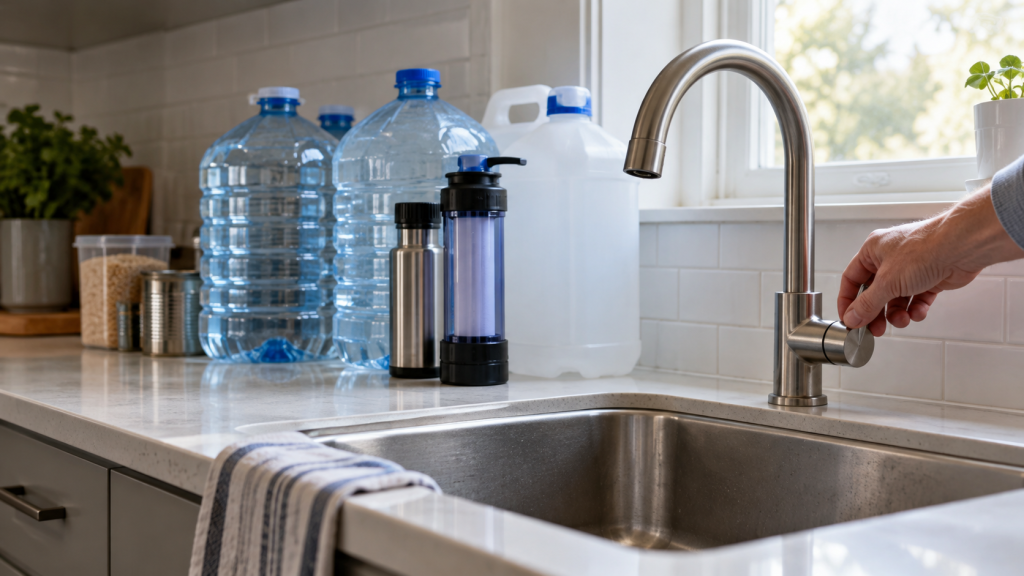
Turn on the tap. Clear water pours out, just like it has thousands of times before. You never think about it—until the day you turn the handle and nothing comes out.
It happens more often than most people realize. A burst main pipe, a contaminated supply, a winter storm that knocks out a pumping station, or a drought that drains a reservoir can all disrupt access. When it happens, store shelves empty within hours, and the people who prepared quietly are the ones who stay calm.
Here is the uncomfortable truth: a person can survive weeks without food, but only about three days without water. That makes water the first thing to plan for—and the thing most households have thought about the least.
The good news is that water preparedness is neither complicated nor expensive. In this guide, we’ll cover how much water you need, how to store it safely, where to find more when supplies run low, and how to make questionable water safer to drink. We’ll also look at the Water Freedom System, a step-by-step digital resource for getting through a water crisis.
Why Water Emergencies Are More Common Than You Think
Most of us assume our water supply is bulletproof. In reality, it depends on a long chain of treatment plants, pipes, pumps, and electricity. If any link fails, the taps can go quiet.
- Extreme weather: Floods, hurricanes, freezing temperatures, and heat waves can damage infrastructure or cut power to pumping stations.
- Aging infrastructure: Pipe breaks and treatment failures can leave neighborhoods without safe water for days.
- Contamination: Sometimes water is flowing but unsafe to drink.
- Drought and restrictions: Prolonged dry spells can force rationing or strict limits.
- Disasters and disruptions: Earthquakes, wildfires, and other emergencies can interrupt service longer than expected.
Preparing is not paranoia. It follows the same logic as keeping a smoke detector or spare tire: you hope you never need it, but you are glad it is there when you do.
Step One: Know How Much Water You Actually Need
A common emergency-planning guideline is one gallon (about four liters) of water per person per day. That covers drinking and basic hygiene, and it is a minimum rather than a comfortable amount.
Adjust upward for hot climates, physical activity, pregnant or nursing women, children, older adults, pets, cooking, and dishwashing.
For a family of four, three days of emergency water is at least 12 gallons. A two-week supply is 56 gallons. That sounds like a lot, but several suitable containers stored in a closet, garage, or basement can completely change your situation.
Step Two: Store Water the Right Way
Use the right containers. Choose food-grade containers designed for water storage or clean, sturdy bottles that previously held beverages. Avoid containers that held milk, juice, or chemicals.
Keep it cool and dark. Light and heat encourage algae and bacterial growth and can degrade plastic. A cool interior closet is better than a hot garage or sunny window.
Label and rotate. Write the date on each container. Follow expiration dates on commercially bottled water. For water you store yourself, replace it roughly every six months.
Know your hidden reserves. A standard water heater holds dozens of gallons and can be drained through its valve in an emergency. Water from a toilet reservoir—not the bowl—may be used for washing and should be purified before drinking if it must be used.
Step Three: Learn Where to Find More Water
Once stored supplies run low, you need options. Resilient households plan in layers rather than relying on one solution.
- Rainwater: Collect rain from a clean surface into clean containers. Check local regulations and purify it before drinking.
- Natural sources: Streams, rivers, lakes, and ponds may help in a true emergency, but the water must always be treated.
- Your community: Emergency agencies may establish distribution points during long outages. Neighbors and local organizations can also pool resources.
This is where structured knowledge becomes valuable. Many people vaguely remember that water can be boiled or rain collected, but few have a clear plan under pressure. The Water Freedom System is designed to organize that knowledge into a practical reference for moments when internet access may be unavailable and stress is high.
Step Four: Make Questionable Water Safer
Contaminated water can carry bacteria, viruses, and parasites. Three established treatment methods are worth knowing.
- Boiling: Bring water to a rolling boil for at least one minute, or three minutes at high altitude, then cool it in a clean, covered container. Filter cloudy water through a clean cloth or coffee filter first.
- Filtration: Portable filters can remove bacteria and protozoa, while some are rated for more. Check specifications because not every filter handles viruses or chemical contamination.
- Chemical treatment: Purification tablets and correctly measured unscented household bleach can disinfect water when boiling is impossible. Follow current instructions from a trusted public-health authority.
No method is perfect for every situation. Boiling does not remove chemical pollutants, filters can clog, and tablets take time. Experienced planners combine methods and keep backups.
Common Water Preparedness Mistakes
- Storing too little—three days is a bare minimum, not a comfortable buffer.
- Relying on a single method, creating one point of failure.
- Forgetting pets, infants, older adults, and medical needs.
- Never rotating stored water.
- Waiting until the emergency to learn or buy supplies.
- Ignoring the mental side: people who practice a plan make clearer decisions under stress.
Where the Water Freedom System Fits In
Not everyone wants to piece together preparedness information from dozens of websites, forums, and videos. A consolidated resource can help by providing one organized reference, walking you through a plan step by step, and giving you a digital guide that can be saved or printed with your emergency supplies.
Interested in a structured, all-in-one reference? Learn more about the Water Freedom System here.
As with any product, do your own research before buying. Review the complete sales page, confirm what is included, and decide whether the topics match your needs. A guide complements real supplies, practice, common sense, and official advice; it does not replace them.
A Simple Action Plan You Can Start Today
- Today: Count the water you have and compare it with one gallon per household member per day.
- This weekend: Set aside enough food-grade containers for at least three days, then label them.
- This month: Add a backup purification method and learn to use it.
- This quarter: Review the plan with your family, including how to access water from the heater safely.
Final Thoughts
Water is the one resource you cannot substitute, delay, or negotiate over. Cooking, hygiene, and health all depend on it. The households that handle disruptions best are not necessarily those with the most gear; they are the ones that understand the basics, have a plan, and have practiced it.
If you want a structured resource to help build that plan, take a closer look at the Water Freedom System and decide whether it fits your household. Whatever you choose, start today—the best time to prepare is long before the tap runs dry.
Disclosure: This article contains affiliate links. If you purchase through them, CoboniKsa may earn a commission at no extra cost to you. We only recommend resources we believe may be useful to readers. This article is for informational purposes and is not a substitute for professional or official emergency guidance.